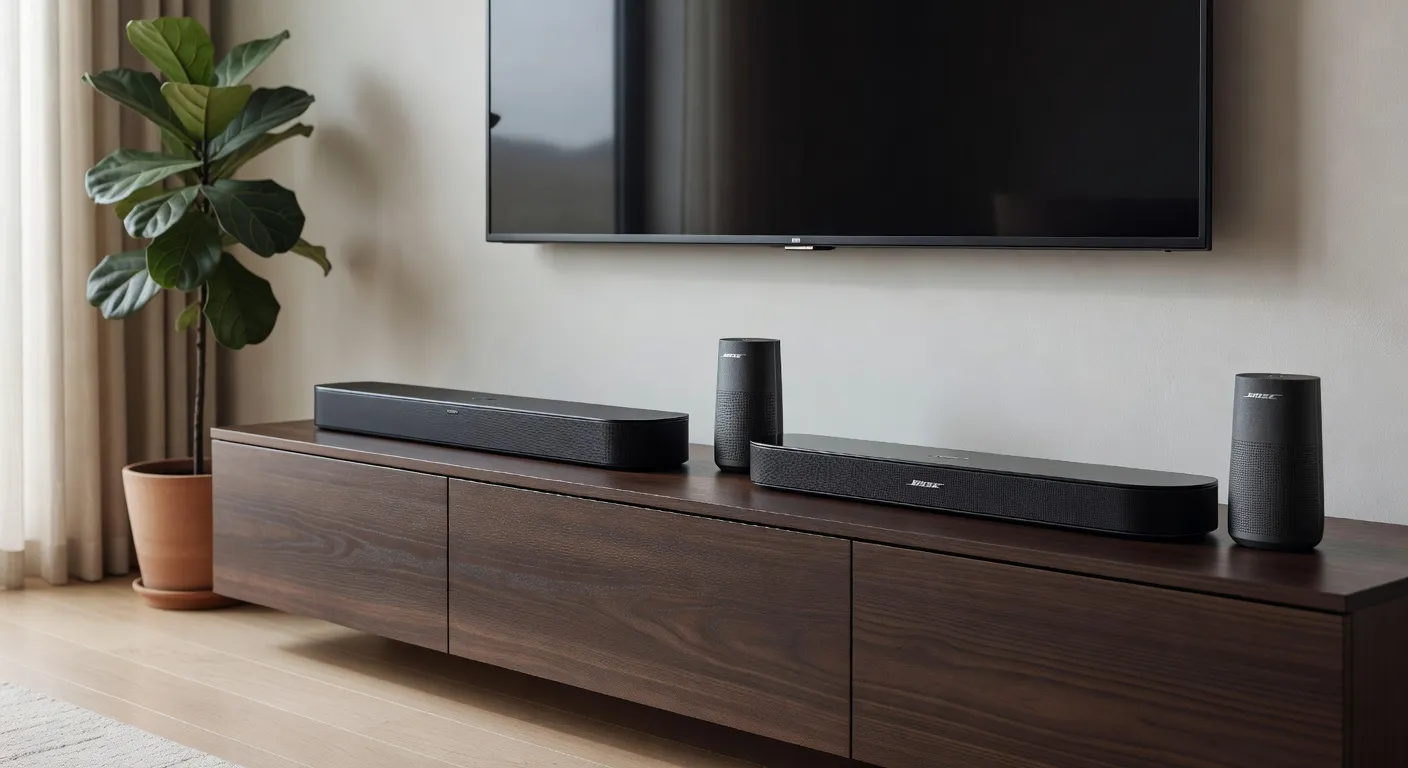
The battle of sound quality between Sonos and Bose home theater systems comes down to immersive audio technology and user experience. The Sonos Arc Ultra, featuring Dolby Atmos and a powerful Sound Motion woofer, delivers impressive bass that doubles that of many competitors. Bose counters with its Smart Ultra Soundbar equipped with Dolby Atmos, AI Dialogue mode, and TrueSpace processing for crystal-clear vocals and a wide soundstage. This Sonos vs Bose home theater comparison will explore key features, audio performance, ease of setup, and value. Whether you prioritize deep bass, vocal clarity, or overall surround sound experience, understanding these distinctions can help you choose the right system for your home entertainment. Expect detailed insights on their latest 2026 models, including connectivity options and app ecosystems.
Did You Know?
Sonos Arc Ultra's Sound Motion woofer delivers twice the bass impact compared to typical soundbars.
Source: Sonos Product Specifications 2026
Overview of Sonos Home Theater Systems
Sonos has established itself as a major player in the premium home theater audio market, with a product lineup designed to satisfy a wide range of listening preferences and room sizes. The standout in their 2026 lineup is the Sonos Arc Ultra, a flagship soundbar that takes Dolby Atmos performance to new heights with the addition of the innovative Sound Motion woofer, doubling bass impact compared to previous models. The Arc Ultra features 11 audio channels and advanced support for object-based audio formats such as Dolby Atmos and DTS:X, making it a powerhouse for immersive cinematic sound.
The Arc Ultra also supports multiple connectivity options including Wi-Fi, Bluetooth, AirPlay 2, and two HDMI 2.1 inputs with eARC, making it highly adaptable for integration with modern home entertainment setups. Its substantial size—45.3 x 4.5 x 3.4 inches—reflects its position as a premium flagship model, priced at $1,099.
For those who need a more compact or budget-friendly option, Sonos offers the Beam (Gen 2) and the Ray. The Beam (Gen 2) continues to support Dolby Atmos with a 3D audio experience and incorporates 5 channels of sound. Similar to the Arc Ultra, it offers broad connectivity features, including HDMI eARC, but with a slimmer profile and a price point of $449. The Ray is designed as an entry-level soundbar with standard stereo sound and 2 channels, making it ideal for smaller spaces or simpler setups. It lacks HDMI eARC support but still provides Wi-Fi and Bluetooth connectivity at a competitive price of $279.
To complement the soundbars, Sonos features wireless speakers like the Era 100 and Era 300 for surrounds or rear channels, enhancing the surround sound experience by adding depth and directional cues. In addition, Sonos offers two subwoofers: the Sub Mini and the Sub 4, both designed to deliver deep, punchy bass that fills larger rooms and improves the low-frequency impact of home theater audio.
Compatibility and configurations between Sonos products are facilitated through the S2 app ecosystem, which unifies the user experience and allows seamless multi-room control, system expansion, and detailed tuning. The multi-connectivity options support various media sources and smart home devices, making Sonos systems versatile and user-friendly for diverse user needs.
How Sonos Systems Stack Up
Below is a detailed comparison of Sonos' key soundbars, illustrating their audio technology, channel counts, connectivity, dimensions, and pricing. The flagship Arc Ultra leads with the most advanced features and highest price, while the Beam (Gen 2) and Ray offer tiered options suitable for different budgets and room sizes.
Visually, the Arc Ultra stands out in Dolby Atmos and channel count, significantly outpacing the Beam (Gen 2) and Ray models:
Sonos clearly aims to provide options across the spectrum, with a focus on Dolby Atmos and immersive sound in their higher-end models, while presenting practical alternatives for casual listeners. This tiered approach contrasts with competitors like Bose, whose lineup often blends premium features with AI-driven vocal enhancements and wide soundstage technologies.
The strengths of Sonos lie in the breadth of compatible speakers, integration ease via the S2 app, and modular upgrades like adding Era speakers or subwoofers to create custom surround sound setups. Whether you’re investing in the top-tier Arc Ultra or starting with the Ray, the system scalability allows users to tailor a Sonos home theater to their exact preferences.
Bose Home Theater Systems Overview
The Bose Smart Ultra Soundbar stands out in the home theater market with its blend of powerful sound performance and cutting-edge technology. Featuring Dolby Atmos with a 5.2 channel setup, it utilizes 9 transducers, including upfiring drivers, to produce immersive audio that fills the room. This latest 2026 model is designed to deliver detailed mids, punchy bass, and crisp treble, ensuring a balanced sound profile suitable for movies, music, and gaming.
One of the hallmark technological advancements in the Bose Smart Ultra Soundbar is the AI Dialogue mode. This feature intelligently enhances vocal clarity, making dialogue easier to hear without increasing the overall volume. It effectively addresses a common frustration in home theater audio, where busy soundtracks can bury critical speech. TrueSpace processing further enhances the audio by creating a wide and natural soundstage that surrounds the listener, contributing to a more expansive and lifelike experience.
Bose’s commitment to connectivity is evident, with support for Wi-Fi, Bluetooth, HDMI eARC, and Apple AirPlay 2, allowing seamless integration into modern smart home ecosystems. Whether streaming music directly or connecting multiple devices, the system offers flexibility and convenience.
Comparison with Sonos Home Theater Systems
When comparing the Bose Smart Ultra Soundbar to competitors like the Sonos Arc Ultra and Sonos Beam Gen 2, specific differences highlight Bose’s unique approach. The Sonos Arc Ultra, for example, features 11 transducers, including a specialized Sound Motion woofer that doubles bass impact, and supports Dolby Atmos with immersive height effects. The Beam Gen 2 is a smaller form factor Dolby Atmos soundbar with balanced sound and 8 transducers but lacks the advanced AI-based vocal enhancement found in the Bose Ultra.
The following table contrasts key features across these industry-leading models, focusing on Dolby Atmos channels, transducer counts, special sound processing technologies, and connectivity options:
Key Feature Analysis
Bose’s AI Dialogue mode is a significant differentiator, addressing the challenge of hearing dialogue clearly amidst complex soundtracks. Neither Sonos Arc Ultra nor Beam Gen 2 currently offers a similar dialogue enhancement feature, giving Bose an edge for viewers prioritizing vocal clarity.
TrueSpace processing in the Bose model creates a wide soundstage that aims to immerse the listener without requiring additional hardware like rear speakers, which Sonos suggests adding with their Era 100 and Era 300 models for surround sound enhancement.
In terms of hardware, the Bose Smart Ultra’s 9 transducers and carefully tuned drivers provide an effective sound footprint for medium to large rooms, while the Sonos Arc Ultra’s 11 transducers including the Sound Motion woofer emphasize deeper bass presence and more channels for complex audio staging.
Overall, the Bose Smart Ultra Soundbar presents a compelling home theater solution by combining advanced audio processing with intelligent design. Its technological innovations like AI Dialogue mode and TrueSpace processing meet specific consumer needs that distinguish it from other premium systems like Sonos. The product lineup from Bose remains focused on delivering high-performance sound with smart features that enhance user experience and flexibility.
Performance Comparison: Sonos vs Bose
When evaluating the performance of Sonos and Bose home theater systems, three key aspects stand out: sound quality, connectivity features, and user experience. These factors decisively influence which system ultimately delivers a superior home theater experience for users in 2026.
Sound Quality Analysis: Dolby Atmos and Bass Performance
Both the Sonos Arc Ultra and Bose Smart Ultra Soundbar support Dolby Atmos, offering immersive sound with precise height effects. The Sonos Arc Ultra leverages a Sound Motion woofer that provides double the bass impact compared to previous models, enriching low-frequency performance for a thunderous cinematic experience. Bose, meanwhile, employs 5.2 channels with nine transducers including upfiring drivers, delivering a balanced but punchy bass with its proprietary TrueSpace processing to widen the soundstage.
While both systems shine with object-based audio, Sonos tends to emphasize woofer depth and immersive surround sound, perfect for audiophiles craving rich atmospheric effects. Bose’s strength lies in clarity, supported by its AI Dialogue mode that ensures vocals remain crystal clear even during intense scenes, alongside detailed mids and trebles.
Connectivity Features and Streaming Support
Connectivity is vital for modern home theaters, and both brands provide robust options. The Sonos Arc Ultra supports Wi-Fi, Bluetooth, and Apple AirPlay 2, with two HDMI 2.1 inputs and eARC, enabling easy integration with various devices. Bose matches this with Wi-Fi, Bluetooth, and HDMI inputs with eARC as well, supporting a versatile range of sources.
Sonos benefits from its S2 app ecosystem which unifies control over multiple speakers and streamlines updates. This app compatibility enhances the streaming experience, allowing support for popular platforms with minimal latency. Bose’s inclusion of AI-driven features extends to its user interface, offering practical enhancements like the AI Dialogue mode that adapts audio for voice clarity during streaming.
User Experience and Ease of Use
The Sonos ecosystem is highly regarded for intuitive control via the S2 app, making system setup and daily operation seamless. Users appreciate the smooth multi-room audio capabilities and the uniform experience across devices like the Beam (Gen 2), Era 300, and Sub Mini.
Bose focuses on a user-friendly experience bolstered by AI enhancements, which assist users unfamiliar with audio setups to enjoy optimal performance quickly. TrueSpace processing translates to a wide and natural soundstage without complicated tuning, appealing to those who want impressive sound without a steep learning curve.
Both brands deliver simple, elegant remote and voice control options, but Sonos edges ahead slightly for users invested in a full smart home integration through the S2 ecosystem.
Performance trends from 2022 through 2025 reveal steady improvements from both manufacturers, with Sonos Arc Ultra’s innovations in bass and immersive sound pushing its performance score upward. Bose’s consistent refinement of sound clarity and AI-driven user features narrows the gap, making both compelling choices depending on user priorities.
Price and Value Analysis
When comparing Sonos and Bose home theater soundbars, price points are a critical starting point. The flagship Sonos Arc Ultra (2026) is priced at $1,199, while the Bose Smart Ultra Soundbar (2026) comes in at a slightly more affordable $999. This price difference reflects some distinctions in features and design philosophy between the two brands.
Both soundbars offer Dolby Atmos for immersive, three-dimensional sound, but the implementations differ. Sonos emphasizes height effects with its Sound Motion woofer delivering enhanced bass impact, accompanied by multiple HDMI 2.1 eARC inputs and AirPlay 2 compatibility. In contrast, Bose’s version offers 5.2 channels with 9 transducers including upfiring drivers, supplemented by its AI Dialogue mode designed to make vocals crystal clear, and TrueSpace processing technology for a wide soundstage.
Connectivity is another area where Sonos pulls slightly ahead with dual HDMI 2.1 eARC ports against Bose’s single HDMI eARC. Both brands include Wi-Fi and Bluetooth, but Sonos adds AirPlay 2 for seamless Apple device integration. Regarding subwoofers, Sonos offers separate options such as the Sub Mini and Sub 4 to complement the main unit, whereas Bose integrates bass into the soundbar with an option for an external subwoofer.
From a cost-versus-features perspective, Sonos demands a premium price, which may be justified if one seeks the option to expand the system with additional speakers and subwoofers. This also ties into the Sonos ecosystem's strength via the S2 app for multi-room audio management. Bose’s Smart Ultra Soundbar, at $200 less, provides very competitive audio performance with AI enhancements that appeal to users focused on vocal clarity and a simplified experience.
In terms of overall value, consumer spending tends to favor Sonos, capturing approximately 55% of the home theater system market share versus Bose’s 35%, with other brands making up the remainder. This reflects a preference for Sonos’ combination of sound quality, ecosystem robustness, and expandability, despite the higher price point.
Ultimately, Sonos offers a top-tier experience for those willing to invest more in a scalable, cutting-edge system. Bose presents an excellent value for users looking for high performance with a focus on vocal clarity and a slightly lower entry price. The choice depends on budget flexibility and desired features within your home theater setup.
User Reviews and Feedback
Sonos users frequently commend the Arc Ultra for delivering a rich Dolby Atmos experience that truly brings immersive height effects to home theaters. Many appreciate the integration with the S2 app ecosystem, which simplifies multi-room audio setups without frustrating connectivity issues. The Sound Motion woofer in the Arc Ultra also receives high marks for providing a bass impact that many users find surprisingly powerful and punchy for a soundbar. Streaming over Wi-Fi and Bluetooth is reported to be seamless, enabling hassle-free listening from multiple devices.
On the other side, Bose users highlight the Smart Ultra Soundbar's AI Dialogue mode, which consistently garners praise for clear and distinct vocal reproduction. This is especially favored by those who value crystal-clear dialogue without losing the immersive quality of the surrounding sound. The TrueSpace processing technology is often mentioned for creating a wide and enveloping soundstage, enhancing the home theater experience with depth and space. Many reviewers also note the punchy bass and detailed midrange frequencies that make Bose’s offering balanced and engaging.
Comparative user ratings show that both Sonos and Bose have loyal fan bases impressed by their flagship products. Sonos is lauded for system scalability and immersive Atmos sound, while Bose excels in dialogue clarity and dynamic soundstage breadth.
Overall, testimonials reflect strong satisfaction on both sides, though Sonos tends to appeal more to those who want an elegant, connected ecosystem, whereas Bose attracts users prioritizing vocal clarity and traditional cinematic audio richness.
Sonos User Feedback
Users commonly praise Sonos for its exceptional Dolby Atmos experience and seamless integration within its S2 app ecosystem, making multi-room setups straightforward and effective.
- • Clear, immersive height effects with the Sonos Arc Ultra
- • Strong bass impact with the Sound Motion woofer
- • Reliable Wi-Fi connectivity and easy streaming options
Bose User Feedback
Bose users often highlight the Smart Ultra Soundbar's AI Dialogue mode and TrueSpace processing, which deliver clarity in vocals and a wide soundstage appreciated in home theaters.
- • Crystal clear vocals in AI Dialogue mode
- • Punchy bass and detailed mids
- • Spacious soundstage with TrueSpace technology
Tips for Choosing Between Sonos and Bose
When deciding between Sonos and Bose for your home theater, start by considering your sound preferences. If you want an expansive soundstage with immersive Dolby Atmos effects and powerful bass, the Sonos Arc Ultra excels with its Sound Motion woofer and rich surround capabilities. Meanwhile, Bose focuses on crystal-clear dialogue with its AI Dialogue mode and a wide soundstage thanks to TrueSpace processing.
Assess how each system fits with your existing devices. Sonos offers seamless wireless connectivity through Wi-Fi, Bluetooth, and AirPlay 2, ideal for smart home integration and multizone setups using the S2 app. Bose also supports wireless functionality but shines with its AI-driven audio enhancements, which might appeal if clear vocal reproduction is a priority.
Evaluate your space and setup flexibility as well. Sonos provides modular options like the compact Ray soundbar and subwoofers that let you scale your system over time. Bose’s setup is often simpler with powerful built-in features designed to deliver premium performance without extensive component additions.
Ultimately, choose Sonos if you want high-end bass impact and a broader ecosystem, or Bose if you prefer AI-enhanced clarity and a straightforward setup.
Important Insight
Choose Sonos for expansive ecosystems and cutting-edge bass. Opt for Bose when you prioritize clear dialogue and AI-enhanced audio.
Frequently Asked Questions
When comparing Sonos and Bose home theaters, the primary difference in sound quality comes down to their acoustic focus. The Sonos Arc Ultra delivers immersive Dolby Atmos with enhanced bass thanks to its Sound Motion woofer, creating a rich, enveloping soundstage. In contrast, Bose Smart Ultra emphasizes crystal-clear vocals through AI Dialogue mode and TrueSpace processing, offering a wide, punchy soundstage with detailed mids and trebles.
Compatibility is another crucial factor. Sonos excels in smart home integration, supporting Wi-Fi, Bluetooth, and AirPlay 2 alongside its well-regarded S2 app ecosystem for multi-room setups. Bose also supports Wi-Fi and Bluetooth but does not include AirPlay 2, focusing more on straightforward premium sound without as much ecosystem flexibility. For users heavily invested in Apple devices, Sonos offers superior connectivity and convenience.
Regarding value, Sonos carries a premium price that matches its advanced features and smart home capabilities. Its immersive surround sound and broad connectivity options justify the cost for home theater enthusiasts seeking cutting-edge audio. Bose presents a strong alternative by prioritizing vocal clarity and ease of use, often at a slightly lower price point. Thus, Sonos is worth the price if you want high-fidelity immersive sound and extensive smart features; otherwise, Bose provides excellent sound quality with simpler setup and usability.
What is the main difference in sound quality between Sonos and Bose home theaters? ▼
Which brand offers better compatibility with smart home devices? ▼
Is Sonos worth the price tag compared to Bose? ▼
Conclusion
When comparing Sonos vs Bose home theater options, the Sonos Arc Ultra stands out with its immersive Dolby Atmos experience and powerful Sound Motion woofer delivering doubled bass impact. Bose’s Smart Ultra Soundbar impresses with AI Dialogue mode and TrueSpace processing, offering clear vocals and a wide soundstage that engages the listener.
Sonos excels in its wider ecosystem, letting you customize setups with speakers like the Beam (Gen 2), Era 100, and Sub Mini to suit various room sizes and preferences. Bose keeps it straightforward but effective with high-quality components optimized for punchy audio and clarity.
Your choice should hinge on room size, sound preference, and compatibility with existing smart home gear. Both brands deliver premium sound, so in the Sonos vs Bose home theater compared debate, personal taste will ultimately be your best guide.
🎯 Key Takeaways
- → Sonos Arc Ultra excels in immersive Dolby Atmos and deep bass with its Sound Motion woofer.
- → Bose Smart Ultra Soundbar features AI Dialogue mode and TrueSpace for clear vocals and wide soundstage.
- → Sonos offers a broader ecosystem with flexible speaker and subwoofer options.
- → Choose based on room size, sound preferences, and ecosystem compatibility.
- → Both brands deliver premium audio, so personal taste is key in Sonos vs Bose home theater compared.
TL;DR: The blog post compares Sonos and Bose home theater systems, highlighting the Sonos Arc Ultra's impressive bass and immersive audio capabilities against the Bose Smart Ultra Soundbar's crystal-clear vocals and wide soundstage. It explores key features, audio performance, setup ease, and value, offering insights into the latest 2026 models to help you choose the right system for your home entertainment needs.